
Digital Dentistry
CEREC Same Day Crowns & Onlays
If your tooth is in need of repair greater than the strength a filling can provide, your tooth may need a crown or onlay. In the past, having a crown or onlay made required 2 visits, two shots, a messy impression, a plastic temporary crown and 2 weeks.
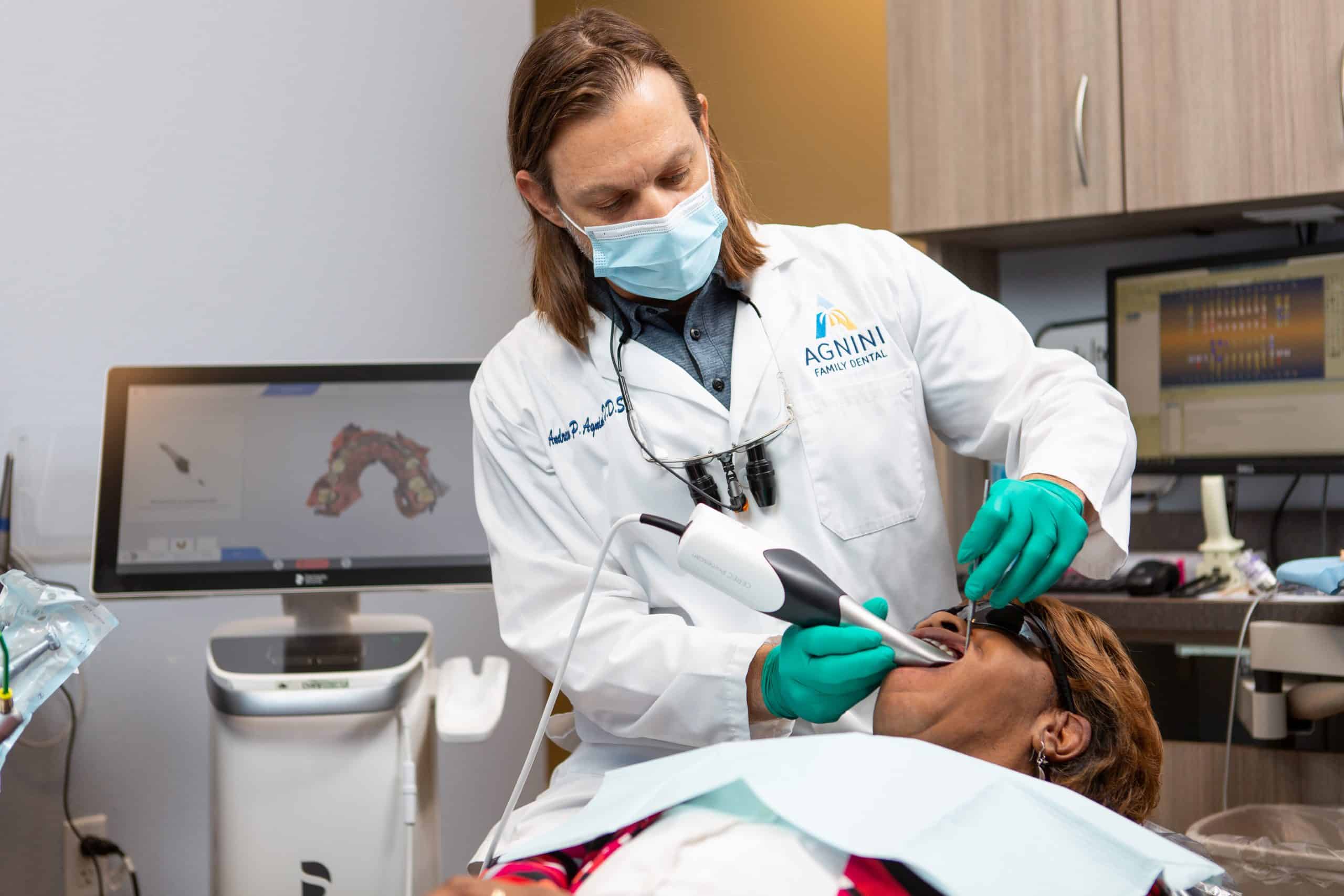
Today, with the advent of CEREC, one of the most exciting technological breakthroughs in modern dentistry, we are able to generate superior quality porcelain restorations (crowns, onlays, & veneers) in a single visit.
- Single visit convenience – no temporaries
- No uncomfortable impression trays
- Beautiful esthetics – color matched ceramic
- Enamel – like materials – natural look and feel
- Clinically proven – millions of successful restorations worldwide
A CEREC restoration isn’t just convenient, it is also healthy. Years ago, dentists could only use amalgam, gold and other metals to fix decayed and damaged teeth. With CEREC, we use a strong, tooth colored ceramic material to restore your teeth to their natural strength and beauty. Also, CEREC is chemically bonded to your tooth, to save as much healthy tooth tissue as possible, while providing you with a restoration that strengthens your tooth.
Lasers in Dentistry
Lasers have been used in dentistry since 1994 to treat a number of dental problems. All lasers work by delivering energy in the form of light. When used for surgical and dental procedures, the laser acts as a cutting instrument or a vaporizer of tissue that it comes in contact with. When used in teeth-whitening procedures, the laser acts as a heat source and enhances the effect of tooth-bleaching agents. When used to aid in TMJ therapy it promotes healing by increasing oxygen and blood flow to affected tissues and reducing inflammation and pain.
There are three types of lasers dentists use during laser procedures: hard tissue, soft tissue, and cold lasers. Each laser uses a different wavelength that makes it appropriate for cutting into that specific type of tissue. This works because each kind of tissue absorbs wavelengths of light in different ways. By altering the light’s wavelength (and sometimes pulse) scientists have figured out how to craft lasers with light wavelengths compatible with the tissues in your mouth.
Examples of Laser Dentistry
Tooth Decay
Hard tissue lasers can not only detect cavities, but are also used to remove decay within a tooth and prepare the surrounding enamel for receipt of the filling. These lasers may even help preserve more- healthy tooth structure during cavity removal.
Gum Disease
Lasers can actually reshape gums which can greatly reduce gum inflammation. Along with this, bacteria can be removed during root canal procedures to reduce inflammation in these instances along with chances for infection.
Biopsy or Lesion Removal
Lasers can be used to remove a small piece of tissue (called a biopsy) so that it can be examined for cancer. Lasers are also used to remove lesions in the mouth and relieve the pain of canker sores.
Teeth Whitening
Lasers are used to speed up in-office teeth whitening procedures. A peroxide bleaching solution, applied to the tooth surface, is ''activated" by laser energy, which speeds up of the whitening process.
TMJ Therapy
With Cold Lasers, two wavelengths are used – one that reduces inflammation and one that relieves pain. Some patients experience long-term results after only 2-3 treatments. The effects are cumulative with most patients being prescribed 5-6 treatments every 2-4 days.
Other Uses
Other ways that lasers are employed in working with the tissues of the gums is in clearing away tissue that is blocking wisdom teeth, exposing impacted teeth during orthodontics, removing the folds in oral soft tissues that are caused by dentures, lengthening patient crowns, dealing with restricted tongue movement, reshaping a patient’s gums to craft a more appealing smile, eliminating throat tissue that can lead to issues such as sleep apnea, and regenerating damaged nerves.
As seen in the examples above, the uses of lasers within the field of dentistry are wide ranging, with many exciting applications. Whether you’re having laser gum surgery or hard tissue work, expect an easier procedure and a shorter recovery time. Laser dentistry is a convenient solution to many oral and dental problems, whether serious in nature or simply cosmetic. Ask your dentist about laser dentistry the next time you need dental work completed.